
Gran Tierra Energy is focused on emissions reductions in three key pillars: first through consistent, transparent and expanded reporting, secondly through our nature-based solutions and lastly, through Gas-to-Power projects. GTE also implements a Corporate Environmental Management Plan that addresses all aspects of environmental protection, including emissions, that guides our environmental policy.
GTE’s emissions reductions strategy is also integrated into our Beyond Compliance Policy. As a company we strive to be an industry leader and leave the environment in a better condition than when we found it.
The following stories expand on the three key pillars that GTE is undertaking to minimize its environmental footprint.
~0%
decrease
~23% decrease in companywide GHG emissions intensity since 2019
8.7
million tonnes
GTE’s NaturAmazonas project is expected to sequester ~8.7 million tonnes of CO2 over the project’s lifetime
+5,0
hectares of land
+5,600 hectares of land have been conserved, preserved or restored
1.9 M+
trees planted
GTE has planted over 1.9 million trees throughout all of GTE’s environmental programs
0%
decrease
GTE has decreased its routine flaring emissions companywide by 75% since 2019
~0%
total energy
Since 2019, Gas-to-Power energy generation has supplied ~83% of the total power used for operations companywide
SWIPE FOR MORE
Preventing Fugitive Emissions Across our Operations
Emissions Reduction: Reporting
Emissions Reduction: Nature-Based Solutions
Emissions Reduction: Gas-to-Power
SWIPE FOR MORE
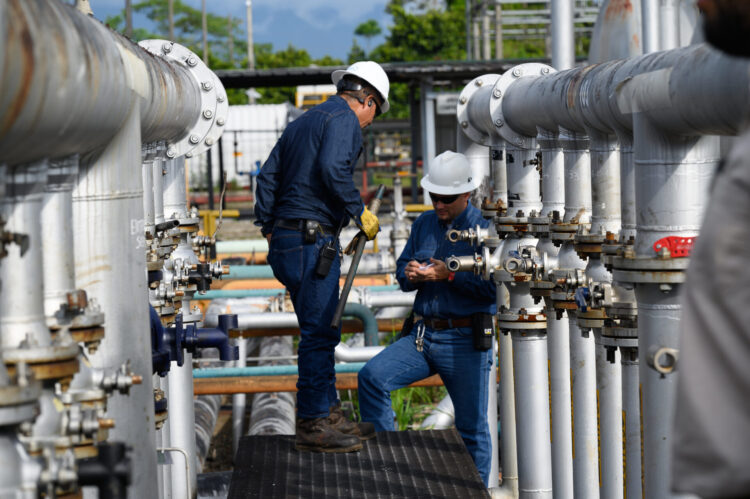
Preventing Fugitive Emissions Across our Operations
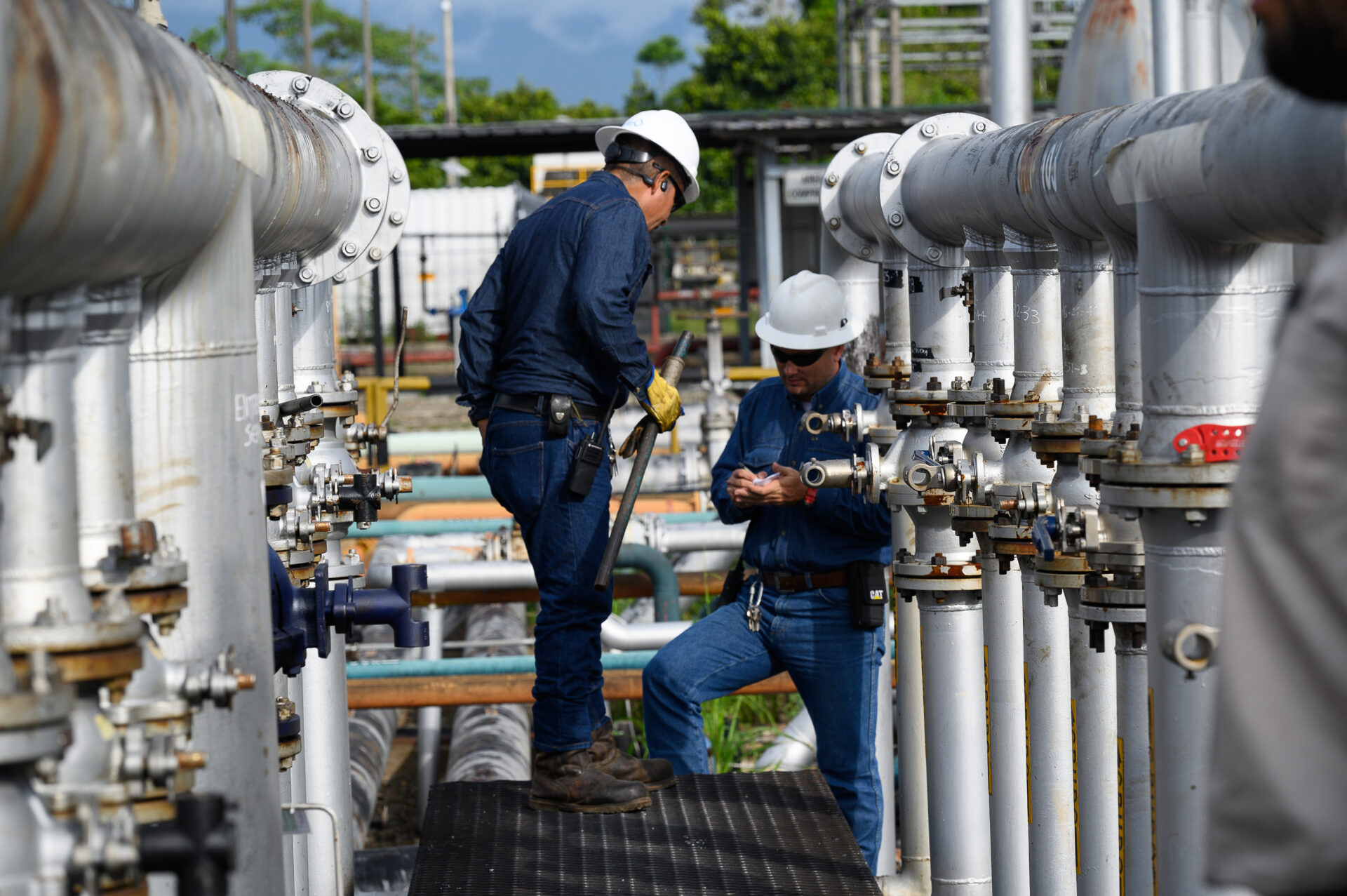
Gran Tierra Energy continues to advance its emissions reduction strategy across all areas of its operations in Canada, Colombia and Ecuador. As part of its commitment to operational integrity and environmental responsibility, GTE conducted a fugitive emissions survey in Colombia in 2024, identifying and repairing several small leaks. In Ecuador, the Company designed its infrastructure early on to meet the highest environmental and operational standards. Across our South America operations, GTE deployed a Tunable Diode Laser Absorption Spectroscopy (TDLAS) technology to measure emissions in real-time, while advanced detection technologies in Canada help monitor and reduce fugitive emissions across its assets.
These regionally tailored initiatives for each country are part of GTE’s broader effort to integrate low-emission technologies wherever possible, as well as proactive maintenance practices across its asset base. The Company is replacing high-bleed pneumatic devices with solar-powered alternatives, optimizing infrastructure to reduce venting, and expanding the use of aerial and ground-based methane detection systems. Together these actions support GTE’s commitment to continuous environmental performance improvement and long-term sustainability of its operations.
Methane Reduction
Gran Tierra Energy is committed to reducing methane emissions across its operations by leveraging advanced technologies, improved monitoring systems, and infrastructure upgrades. The Company has implemented a variety of initiatives, including Leak Detection and Repair (LDAR) programs, third-party verified monitoring, and equipment electrification to reduce fugitive emissions. These initiatives are tailored to the regulatory context and operational realities of each country in which GTE operates.
The following sections highlight GTE’s methane reduction actions in Canada, and South America:
Canada
Gran Tierra continues to work diligently to monitor and manage fugitive emissions across its Canadian operations, while actively reviewing and implementing technologies to further reduce emissions. In Western Canada, GTE used aircraft-mounted Light Detection and Ranging (LiDar) systems and replaced gas pumps with solar-powered pumps across 255 sites to modernize field infrastructure and support more sustainable, lower-emission operations. Recent reviews of pneumatic equipment and vent sources have improved emissions inventory accuracy and strengthened the reliability of the Company’s emissions reporting. These upgrades, along with site electrification and equipment replacement, have cut fugitive emissions by over 50% from 2023 to 2024 and reduced total emissions by approximately 17,000 tCO₂e annually.
South America
GTE implements a government-approved LDAR program, using third-party Optical Gas Imaging (OGI) camera inspections to identify and repair leaks. In 2024, a full fugitive emissions survey further supported these efforts. Generation equipment is strictly monitored for gas quality compatibility, reducing emissions through efficient fuel use. From 2019 to 2024, methane emissions in Colombia have dropped by 37%, from 5,971 to 3,762 tons.
In 2025, Gran Tierra’s South American operations deployed a Tunable Diode Laser Absorption Spectroscopy (TDLAS) sensor, which uses laser light to quickly and accurately detect and measure specific gases in real time, helping GTE monitor emissions, safety and process performance. Combining the high-resolution imaging and AI analysis across 90% of our fields in Colombia and 100% of our fields in Ecuador, GTE was able to identify and remediate methane emission sources more efficiently across its operations. This campaign contributed to a 27% reduction in fugitive emissions compared to 2024 by enabling more precise detection and more efficient identification and localization of methane leaks.
Emissions Reduction: Reporting
Gran Tierra Energy’s environmental policy calls for the Company to track its greenhouse gas (GHG) emissions and take steps to reduce them wherever economically feasible.
Gran Tierra continues to voluntarily retain a respected expert in the field of air quality to create an assessment of its greenhouse gas emissions in Canada, Colombia and Ecuador. This GHG assessment involves collecting, analyzing and quantifying annual air emissions data from GTE’s operations. It’s conducted according to the guidelines and standards adopted by the following organizations: International Petroleum Industry Environmental Conservation Association (IPIECA), International Association of Oil and Gas Producers (IOGP), American Petroleum Industry (API), U.S. Environmental Protection Agency (EPA), Canadian Association of Petroleum Producers (CAPP) and Intergovernmental Panel on Climate Change (IPCC). Since 2016, the Company also reports to the Carbon Disclosure Project.
An updated assessment using 2025 air emissions data will be released in 2026. View the 2024 Greenhouse Gas & Air Quality Report here.
Emissions Reduction: Nature-Based Solutions
Nature-based solutions are an important pillar of Gran Tierra’s emissions reductions efforts, and the Company supports environmental projects that aid in natural carbon sequestration. Natural carbon sequestration is the process of capturing and storing atmospheric CO2, as forests, wetlands and vegetation sequester carbon by capturing carbon dioxide from the atmosphere and converting it into organic matter.
Across all of its environmental programs, GTE has planted over 1.9 million trees and has conserved, preserved, or reforested over 5,600 hectares of land since 2018. Careful management ensures that the once-delicate saplings grow into sturdy, mature trees that contribute to national emissions reduction strategy goals. These efforts are undertaken through major initiatives including the NaturAmazonas project and the Costayaco and Acordionero Forestry Centres, which serve as hubs for sustainable reforestation and community.
Reforestation Project with Conservation International
NaturAmazonas, Gran Tierra Energy’s flagship conservation program with Conservation International, has grown into a powerful alliance of public and private institutions tackling the root causes of deforestation.
NaturAmazonas has been at the forefront of Colombian conservation and reforestation efforts for eight years. With an $18 million investment, GTE has created a model for protecting the Colombian Amazon’s land, water, air, and biodiversity. In partnership with Conservation International, the Colombian Ministry of Environment and Sustainable Development, and Corpoamazonia, the program has restored ecosystems, fortified biodiversity and advanced sustainable agriculture. Equally important, NaturAmazonas strengthens the connection between people and nature, supporting lasting impact in one of the world’s most biodiverse regions.
This program has achieved significant impact in its reforestation efforts, promoting sustainable land use, biodiversity, and community development. Through efforts such as restoring over 2,100 hectares of land, cultivating over 338,000 seedlings, installing 234 beehives and supporting over 590 hectares of cacao under agroforestry systems, it has helped protect native forests, support peace and stability through economic opportunities for rural farmers and improve local ecosystems. Thousands of local people have gained access to training and resources, resulting in improved agricultural productivity. Overall, this program reflects a balanced approach to environmental conservation and strengthening rural communities.
To read more about the NaturAmazonas project, click here
Costayaco Forestry Centre: A Unique Resource for Reforestation
The Costayaco Forestry Centre (CFC), established by Gran Tierra Energy in coordination with the regional environmental regulator, Corpoamazonia, is one of the most innovative reforestation efforts in South America. The CFC contains 334.5 hectares of new and maturing forested areas and is close to achieving its long-term goal of connecting a critical ecological corridor linking the Andean foothills with the Amazon Rainforest. These two ecosystems are some of the most biodiverse in the world.
To learn more about the Costayaco Forestry Centre, click here.
Acordionero Forestry Centre
Following the success of the Costayaco Forestry Centre, the Acordionero Forestry Centre (AFC) in San Martín, Cesar, was launched in 2024 as a 185-hectare environmental innovation hub located in El Cairo village, a strategically important conservation zone in Cesar. It is Gran Tierra’s hope that AFC will play a key role in restoring forest corridors and preserving water bodies thar provide water to the surrounding communities. Nearly 11,000 native trees have already been planted at the Centre, reinforcing the Centre’s contribution to ecosystem recovery in the region. The AFC has also been designed to test and implement sustainability efforts aimed at long-term environmental resilience and regional economic development, by implementing sustainable initiatives such as aquaponics, biorefinery systems, and growing native flora species.
Through the AFC, Gran Tierra Energy continues to support community-driven initiatives to strengthen Colombia’s ecosystems and support local families.
To learn more about the Acordionero Forestry Centre, click here.
Emissions Reduction: Gas-to-Power
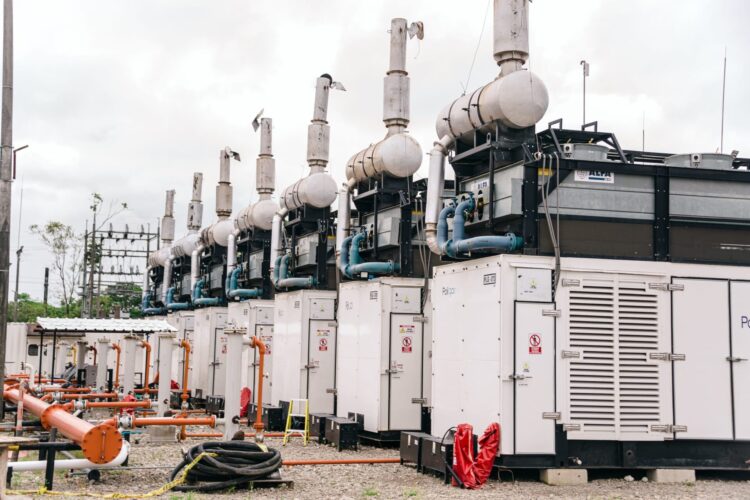
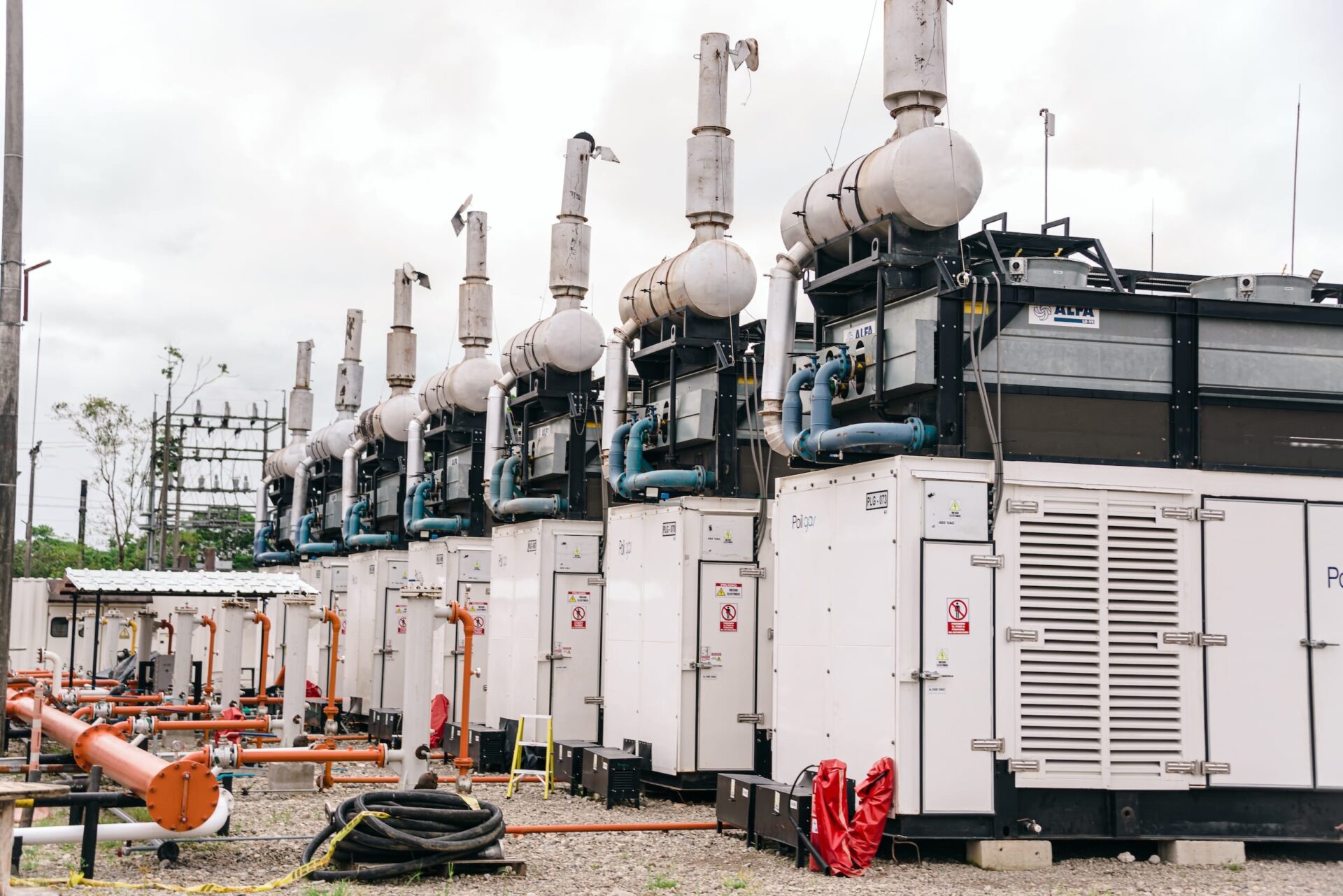
Gran Tierra’s ongoing effort to reduce direct emissions by converting associated gas produced from its wells into an energy source for its operations, continues to generate results. Additionally, converting gas to electricity significantly reduces the demand on municipal utilities, increases fiscal resilience by lowering unit production costs, and provides a more stable energy supply, while reducing flaring and greenhouse gas emissions.
The Company’s Gas-to-Power (G2P) program has significantly reduced emissions intensity over the last few years by using produced natural gas to produce electricity, reduce flaring, and significantly reduce the need to purchase, transport, and burn diesel fuel. When excess power is produced, GTE can provide additional electricity to the local grid helping residents and stabilizing energy sources. In 2025, approximately 93% of GTE’s production in Colombia was generated from fields utilizing gas-to-power systems, while in Ecuador, gas supplied 66% of the power required for operations.
With all major fields fully converted in Colombia, GTE has turned its attention towards generating gas power at its smaller locations and in Ecuador. GTE began its G2P implementation in Ecuador in 2024, further contributing to the reduction of GHG emissions, flare volumes, and costs related to diesel consumption. These actions support GTE’s ongoing efforts to produce oil with the minimum possible associated GHG emissions and eliminating routine flaring at the Company’s facilities.
| FIELD | GAS-TO-POWER (kWh) | GAS USED (scf) | SAVINGS (USD)1 |
|---|---|---|---|
| COSTAYACO2 | 58,870,029 | 681,635.30 | $2,598,417 |
| MOQUETA3 | 29,220 | 353.83 | $3,941 |
| ACORDIONERO4 | 127,528,916 | 1,678,889.58 | $2,865,189 |
| MONO ARAÑA6 | 212,072 | 6,543.40 | $62,533 |
| LOS ANGELES7 | 508,808 | 15,270.21 | $96,814 |
| COHEMBI8 | 18,692,400 | 129,078.51 | $1,488,703 |
| BOCACHICO | 2,345,547 | 23,654.60 | $521,806 |
| CHARAPA | 2,077,755 | 30,438.09 | $614,433 |
| IGUANA | 1,619,198 | 14,543.37 | $231,301 |
| CONEJO | 141,223 | 4,121.58 | $7,702 |
-
View Footnotes
-
[1] TRM=$USD 3,700
[2] Savings calculated from increase in grid usage vs diesel generation. Diesel tariff 0.29 USD/kWh.
[3] Savings calculated from increase in gas generation vs grid usage. Grid tariff 0.13 USD/kWh
[4] Savings calculated from increase in power generation efficiency resulting in reduction in exte
al gas usage. Exte
al gas tariff 18USD/MBTU.
[5] Savings calculated from increase in gas generation vs diesel generation. Diesel tariff 0.29USD/kWh.
[6] Savings calculated from increase in gas generation vs grid usage. Grid tariff 0.20USD/kWh.
[7] Savings calculated from increase in LPG generation vs diesel generation. Diesel tariff 0.37USD/kWh
[8] Savings calculated from increase gas generation vs diesel generation . diesel Tariff 0.21 USD/kWh